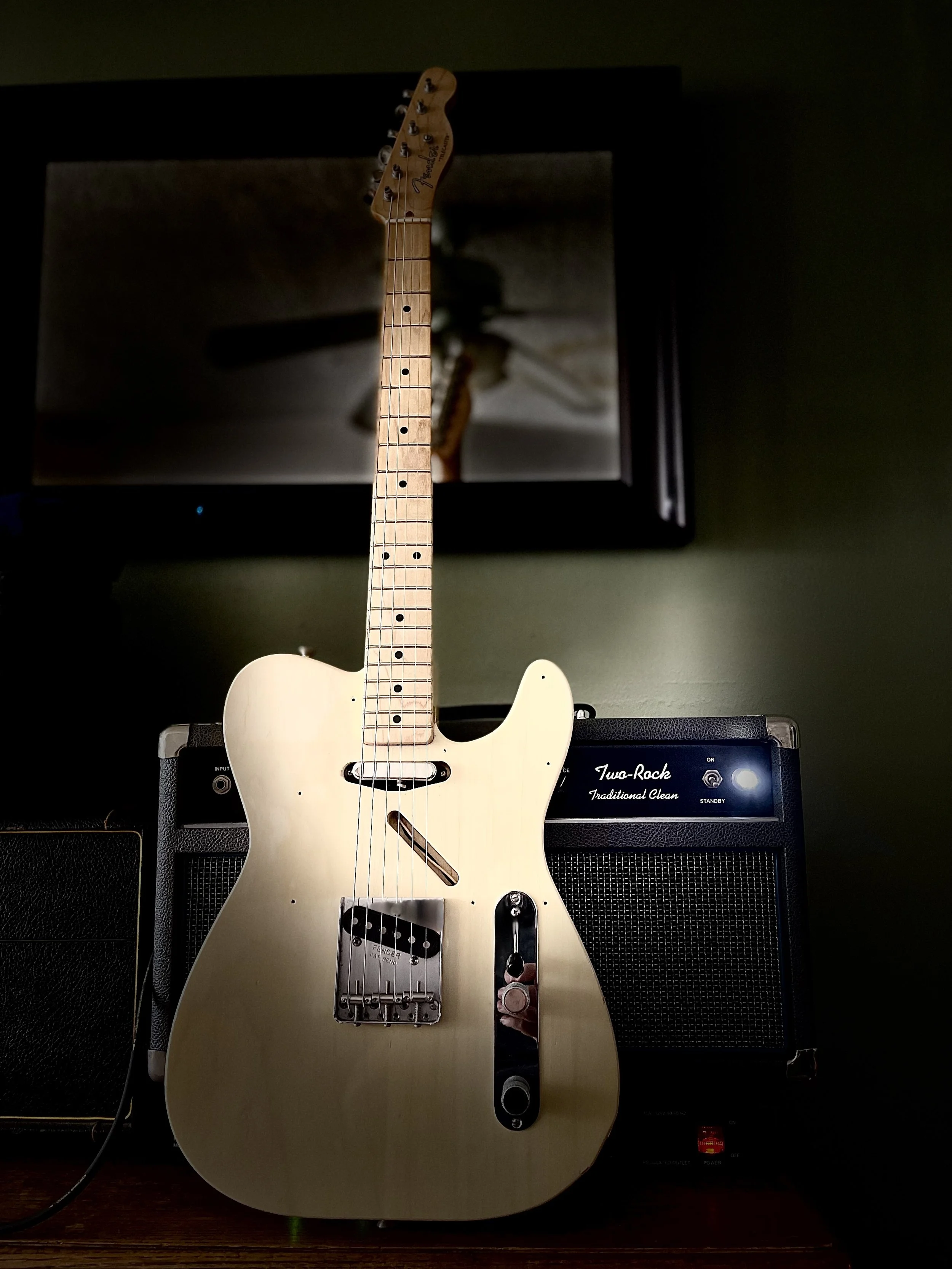
RON ELLIS PICKUPS || TELE SET || STANDARD & 50B

Hello Gearheads! Welcome back to another moment where I get to share with you incredible and interesting gear for the modern guitarist. Today, I’ve got the absolute pleasure to feature another wonderful set of pickups from whom I consider to be one if not the absolute best winders in the business… Ron Ellis Pickups! Ron was kind enough to guide me through what I wanted to hear in a set of Telecaster pickups and his recommendation couldn’t have been more spot on! The Standard neck pickup and the 50b bridge pickup have opened up my scrappy little parts Telecaster in ways I never thought possible.

Ron Ellis Pickups are quite possibly the best in the biz. The manner in which clarity meets warmth, presence and sweetness abound… there’s nothing quite like them! This is not my first foray into the Ron Ellis multiverse… Check out my previous feature on a wonderful set of Stratocaster pickups here: CLICK ME . The Standard & 50b are an equally surprising and eye opening experience as my first!

The Standard neck pickup was described to me as the quintessential Tele neck tone and I couldn’t agree more. There’s that magic warm pillow that responds so well to pick attack, the bite that’s available just under that sweet and soft bubble. You hit it hard and it will reward you, you pull back and the tone is sweet and round. Both pickups are very open yet somehow not bright or brittle. They sound natural and the touch to feel ratio is quite addicting.

The Standard is the gold standard when it comes to vintage-like Tele neck sound. It emulates the 50's Telecaster neck by utilizing the exact materials used in the early days of the Telecaster It has beautiful warmth, clarity, depth and an overall great feel. 

The Standard is a great companion to our Blackguard 52T, Broadcaster 50B, and 60T for authentic vintage sound and feel. It's ideal for a restoration project, an early era telecaster, or any player looking to get a rich vintage sound.g to get a rich vintage sound.er, or any player looking to get a rich vintage sound.

The 50b bridge pickup is pure unadulterated 50’s Telecaster tone. You smack that pickup selector to the bridge position and WHAM! You’re faced with a rich and fat spanky jangle that I can only describe as what “we” all think of when someone refers to how a Telecaster sounds. It’s pure, open and harmonically rich. There are no dead or unbalanced spots. Telecaster bridge pickups have been historically overly bright and harsh to ear, which many have attempted to “fix” over the years by taming the transients or altering the frequency response but you always loose some part of that magic puzzle… when you muzzle. Not the cases with the 50b! Ron’s expertise in somehow preserving everything we love from the old and vintage pickup designs while merging them with modern usability and function is maybe one of the most impressive aspects of the Ron Ellis brand.

50B is a vintage recreation of the earliest broadcaster pickups. It has wonderful dimensional harmonics surrounding fundamental notes. The 50B Broadcaster has more harmonic content, compression, and bloom in the upper mids and top end vs the more fundamental 52T bridge. It captures the bite and energy of early 50s broadcaster pickups using exact materials found in those same pickups.

When you think of the 50B, think of Roy Buchanan, Keith Richards and Mike Campbell sounds. The 50B is well suited for rock, country, and for artists focusing on top-end tonality.

I’ve said it before and I’ll continue to say it every time I have the joy to play through a set of Ron’s pickups… they are the bridge between your guitar’s voice and the fingers behind the notes played. They truly bring out the best in one’s playing and the experience is unique and something I want out of every single instrument I own. The only prescription to that ailment is more Ron Ellis! I look forward to exploring more of the pickup line in the brand and cannot wait to share my experiences with you all!
In the demo below, I used a “parts” Tele and Ron Ellis Pickups (which btw is a Maple Musikraft neck and a Guitar Mill lightweight Ash body) in all of the tracks. I did use a variety of effect pedals and a few amplifiers to get the most out of the composition. Again, these pickups really do bring out the best in this guitar! I couldn’t possibly recommend them or Ron’s work anymore… even though I’ll find a way!

Thanks for checking this Gearheads Feature on the Standard & 50b set from Ron Ellis Pickups. If you’d like to learn more about Ron and his work please do check out these sites for more information.

https://www.ronellispickups.com

https://www.instagram.com/ronellispickups/

https://www.facebook.com/ronellispickups

Until next time Gearheads, please take a moment to Like, Subscribe & Share this Feature and I’ll see you all very soon!

ELECTRONIC AUDIO EXPERIMENTS || CITADEL || PREAMP & DRIVE

Hello Gearheads! Today I’ve got a super cool pedal on the block. The folks at Electronic Audio Experiments are cranking out some very interesting circuit designs and I had the joy to experience and now share the Citadel with you all. EAE has a unique varietal of sonic pushers in their line up and I’m honestly blown away by how great the Citadel sounds… I cannot wait to check out more from them!

The Citadel is in part a few things. It’s a familiar boost and drive pedal in the British family of tones, capable of being a simple clean boost to a medium gain drive bordering on distortion. It’s also a versatile Preamp that you can run either into the front end of an amplifier or use as a direct solution via an IR (impulse response) along with your favorite amp-less tools. This pedal sounds fantastic and it’s DEAD SIMPLE to operate. For those who have followed my features or my general perspective, you’ll know I prefer great sounding gear but without the extra nonsense that often comes with too many controls or features.

The Citadel was modeled after EAE’s Model feT, a preamp pedal based on the venerable and popular in the DOOM musical genre, Sunn Model T amplifiers. Here’s a bit on the lineage of the Citadel from EAE:

“The Citadel began as a series of experiments on our Model feT pedal. Like any tube amp, there are ample opportunities for modifications. After all, the original Model T was itself a modified take on the Super Bass sound, delivering a distinct variety of the plexi flavor with fuzzy breakup and a huge low frequency punch. So, what if we flavored it our own way? Once Brad completed his “Marsha” prototype, it was on. In a way, you can almost think of the Citadel as a re-plexi-fied Model T sound, trading low end sludge for a sparkly midrange focus. In another way, you can think of it as what we’d do if the original Model T wasn’t too sacrosanct to modify.”
— EAE

As I mentioned above, I found the Citadel to function quite easily and getting stellar preamp colored tones to crunchy Plexi tones is right in those controls. Specifically, the Bright Gain and Normal Gain controls work as core EQ and Gain standpoints. Just like the way a real 4 hole Marshall Plexi would work. You turn them both up and adjust each one to suit your end result. I LOVE the way this works on the real amps and I absolutely love how it works with the Citadel. It may seem odd at first for anyone who hasn’t had experienced vintage Plexi style amps before, but it’s truly instinctual once you get your head around it. Need more low end? Push the Normal Gain. You need more cutting top end? You know what to do…. it’s simply AWESOME.

EAE recommends running the Citadel in a specific manner at first, you can check that out below. I found my favorite setting by running the Bass and Treble at 0 and Midrange at 10. It’s considered their flattest EQ response, which makes complete sense why I prefer that! I’d then simply use the two Gain controls to add more or less of what I needed. The Citadel is somehow transparent while still being completely colored. An oxymoron and probably impossible in definition, but functionally and sonically - it’s exactly that.

“To dial in your Citadel for the first time, start with all EQ knobs at their mid-
point. Leaving the Bright Gain control off, turn up the Normal Gain and Master
volume until you reach your desired amount of drive and volume. Then, turn up
the Bright Gain control. You should hear extra gain and high end presence as the
Bright Gain is turned up. Try adjusting the relative mix of Normal and Bright gains
to achieve your desired sound and feel.
From there, adjust the EQ slowly, listening as you rotate each control. While
highly common, the FMV eq is relatively idiosyncratic”
— EAE

I really loved… well rather LOVE the Citadel. I’m still digging into great tones and parts with this pedal. It’s wildly useful in the studio and I can only imagine it would kill in live environment. I even used the Citadel on all the electric Bass tracks!

Honestly, this pedal would serve anyone looking for a versatile EQ and boost pedal, British style drive or direct rig. No mud, nothing you don’t want, it’s a quick favorite that’s for sure!

Thanks for checking out this Gearheads Feature on the EAE Citadel. If you’d like to learn more about the Citadel or any of the other great releases I referenced, please do check out these sites for more information.

https://www.electronicaudioexperiments.com/

https://www.instagram.com/electronicaudioexperiments/

https://www.facebook.com/ElectronicAudioExperiments/

Until next time Gearheads, please take a moment to Like, Subscribe & Share this Feature and I’ll see you all very soon!

DANELECTRO || NICHOLS 1966 || THE "MYSTERY" FUZZ

Hello Gearheads! Happy to meet you again at the corner of all that is toneful. Today I’ve got a very cool pedal to share with you all. The Danelectro Nichols 1966, the most recent offering from Danelectro’s updated and in opinion, upgraded pedal line.

Originally founded in 1947 and since producing a bevy of historic instruments, amplifiers and ultimately pedals, Danelectro have been a music making company always sewn into the very fabric of music history. For all things historically accurate, please take a look at this fabulous interview from JHS and Danlectro owner Steve Ridinger: The Story And History Of Danelectro

Danelectro and Ridinger have been releasing some very cool, well built designs in their more recent pedal campaigns. Other notable pedals they’ve released include a great Foxx Tone Fuzz style fuzz, an impressive Ibanez Mostortion influenced drive, and a re-release of their much lauded “Back Talk” reverse effect. The Nichols 1966 sits proudly with these excellent releases as not only a versatile and unique take on the 60’s psychedelic but also for being a great sounding circuit.

Admittedly, the Nichols is marketed as a fuzz pedal that is not just a fuzz pedal. At it’s core is an original circuit Ridinger designed out of necessity in his garage as a teenager in the Hollywood Hills. It rides the line between distortion and fuzz resulting in a unique voice that sings with clarity and sustains like a great fuzz would.

“Steve had no money to buy a fuzz and no access to any schematics. So he created a completely unique circuit architecture that has never been seen again. Although he called his box a “fuzz”, it was in fact half way between a distortion and a fuzz. ”
— Danelectro

Nichols sports a simple feature set that in my opinion gets you where you need to go fairly quickly… my favorite! Drive and Fuzz work independently and with each other to achieve the amount of gain and saturation you need, but also fine tune the feel of the fuzzy distortion which is very useful in a band mix or recording scenario. Volume acts as a global master volume to balance out the way the pedal hits the front end of your amplifier. I found quite a bit of volume available ‘on tap’ which is extremely useful to me as most vintage style fuzzes are pretty neutered in that regard. The tone control and stock/mid cut controls further allow for tailoring the Nichols to your rig. I found the tone control best all the way counterclockwise, which from my ears, removes the tone control from the circuit path and you get a flat, non restricted source. I also preferred the stock setting on the mini switch as it was the most robust and full. I could see using the Mid Cut switch to scoop out the midrange and approximate a Superfuzz style fuzz pedal if that’s the kind of tone you’re after. I tend to prefer the most open and harmonically rich tones I can get, so I opted to not use that.

All in all, I think the Nichols 1966 is a really enjoyable and unique pedal to add to anyone’s arsenal and recommend you checking one out. Being able to ride the line between pushed amp tones to squelching fuzz all within the 60’s psychedelic motif, is a very good thing indeed.

Thanks for checking out this Gearheads Feature on the Danelectro Nichols 1966. If you’d like to learn more about the Nichols 1966 or any of the other great releases I referenced, please do check out these sites for more information.

https://danelectro.com/pedals/nichols-1966/

https://www.instagram.com/danelectro_official/

https://www.facebook.com/danelectro.official

Until next time Gearheads, please take a moment to Like, Subscribe & Share this Feature and I’ll see you all very soon!

BIG MONK DEVICES || THE POMPEII || A MODERN FUZZ FACE

Hello Gearheads! Today I’d like to highlight another smaller builder, Big Monk Devices out of Baldwinsville, NY. I’ve known of Big Monk for several years as a builder on the popular gear forum, The Gear Page. Always offering a unique perspective and and looking to maintain the historical accurate tones without the historical problems associated with vintage gear. Monk seems to find importance in not being beholden to the artifacts of said history, but more importantly find excellent and I might add smart solutions to achieve the same tones we ALL love.

Enter The Pompeii. The Pompeii at it’s heart is a simple Silicon Fuzz Face, taking it’s namesake from a very famous era in the band Pink Floyd’s musical history. David Gilmour of Pink Floyd was famous during that time for using a specific Dallas Arbiter Fuzz Face, achieving those rich and fuzzy lead tones saturating the air waves then… and now.

I spoke earlier of Big Monk’s penchant for busting down the archetypes of vintage gear and one of the most interesting and honestly mind blowing additions to this circuit is how it interacts with a buffer…. or shall I say doesn’t interact at all! You can literally place this Fuzz Face anywhere in your chain. After a buffered pedal, second in line, ninth in line… you can literally put it anywhere and The Pompeii will “act” as it’s sitting pretty first in line right after your guitar cable. I’m not sure what magic Monk is conjuring with this hat trick, but I’ll tell you it’s impressive. One of my favorite examples of testing this feature…er… improvement, was using the active preamp boost on my Tyler Retro SE. Normally turning that little bugger on would smash the front end of any fuzz and make it sound like gated wall of bees. It’s not something you’d do with a vintage fuzz pedal. Not the case here. The Pompeii hold it’s voice and doesn’t “geek out” in the slightest way. Impressive!

Sonically, I found The Pompeii to have less gain than most Silicon Fuzz Faces and specifically what we would maybe think of when hearing Pink Floyd, but one must remember that Gilmour’s tone was sustaining, not necessarily a fuzzy mess. The Pompeii yields a fantastic and strong voice and when coupled with an amplifier that’s working well on the edge of breakup, you’re rewarded with incredible sustain, weight and a clean volume roll-off like no other. It’s a fantastic sounding fuzz that I honestly wouldn’t put in any corner just because it’s named about a famous band’s seminal period.

I found I really appreciated the way this fuzz interacts with guitar and all of it’s controls significantly more than any typical Fuzz Face replica. That’s not to say I don’t love those for their quirks, their feel and delicate details… I do and if you’ve followed my features, you know that to be true. That said - there’s something very cool happening here. It’s a marriage of simplicity in design, simplicity in feature set and ultimately, simplicity in the tone The Pompeii delivers. I’ve tried MANY “improved” Fuzz Face designs and none have had the utility of sound down to such a pleasing manner. Hats off to Big Monk in a big way.

In the video demo below, I used The Pompeii on all the electric guitars. I used the volume knob on my guitar to get the cleanest tones by rolling it down. I really enjoyed making this feature and hope you enjoy watching it as well! I highly encourage you to check out Big Monk Devices and experience this great sounding fuzz!

Thanks for checking this Gearheads Feature on the Big Monk Devices Pompeii. If you’d like to learn more about Big Monk Devices and their work please do check out these sites for more information.

https://bigmonkdevices.com

https://www.instagram.com/bigmonkedc

Until next time Gearheads, please take a moment to Like, Subscribe & Share this Feature and I’ll see you all very soon!

SUPERNAUT SOUNDWORKS || MASCHINE 'TAPE ECHO CHAMBER'

Welcome back Gearheads! Today I’ve got a reaaaaally cool pedal feature… if you’ve followed me over the years, you’ll know that I’ve had a penchant for a certain plastic delay pedal from the 90’s. That pedal being the Ibanez EM5, Echomachine. I’ve actually done a few past articles on the ole’ EM5, which you can check out HERE if you’d like to see what the buzz is about. The original has often been blasted for being made out plastic, including the knobs, potentiometers, jacks… and pretty much everything else on the pedal. Companies like Xact Tone Solutions out of Nashville have come up with series of modifications to help the original pedals become more road worthy, take a look HERE at my feature on their process.

All of that to say the original EM5’s (modded or not) are not only difficult to source these days with it’s popularity, their increase in value making what was once a $50 hidden gem, now many times over, fetching $250 for busted up versions to $500 for excellent examples. Enter in Dominic of Supernaut Soundworks! Taking on the monumental task of not only sourcing the materials to make this delay pedal, but more importantly improve upon it’s core elements, Dominic set out to do something really special.

Supernaut Soundworks is decidedly a small shop affair, existing within the hallowed grounds of like minded gear aficionados and tone geeks much like myself, catering to making cool gear that’s not just inspired but evolved from it’s original state into something much more than a sum of it’s parts. I’m really looking forward to seeing what Dominic does with Supernaut Soundworks… I see a very bright future ahead.

The Maschine ‘Tape Echo Chamber’ is not just another EM5 clone. First off, a kudos to not just showing up as a 1:1 clone of the EM5, but instead taking the features and the design in a different direction. There’s an elegance to the entirety of this release. The dark silver hammertone enclosure, the choice of knobs, the box it comes in… the manual! It may sound ridiculous, but I’ve owned many pedals from huge ‘big box’ companies that don’t have the fit and form that Supernaut is putting into their release.

Maschine has a wonderful bevy of useful feature modifications to this type of circuit. Most notably, Tap Tempo, (Smart) True Bypass, Tone Control, Modulation with variable waveforms and Subdivision control. These features make Maschine a very useful delay pedal that has all the sweet tone of the EM5 circuit but takes it into our modern paradigm.

Tonally, Maschine offers the familiar percussive yet pillowy cloud that can sit right behind your fretted note, but also offers what I like to call the ‘DMM’ effect, a nod to the EHX Deluxe Memory Man. Using the variable modulation circuit, I was able to dial in my favorite kind of pitch vibrato delay tone that I often find in a Deluxe Memory Man. I was and am incredibly pleased with this pedal. It truly sounds fantastic. Many times simply adding a modulation circuit to an existing pedal can sound almost fake or weird, not the case here with a very natural sounding circuit that can be set to subtle all the way to seasick warble.

There are some extra features that I did not explore in detail, but are worth noting. Maschine can operate in Legacy Mode, which is the original version as offers 90ms-600ms of delay time as well as Extended Mode, which allows you to change the range of delay time to 50ms-900ms. Running the Extended Mode could yield more signal noise and/or distortion. This is due to how the delay chip (originally designed for a Karaoke machines) function. There is also a feedback or ‘Swell’ function where the delay trails will ‘run away’ or simply feedback onto themselves. You can achieve this by holding down the tap tempo footswitch. Internal trimmer controls can further adjust that ‘Swell’ along with ‘Feedback’ controlling how many repeats show up in the repeat knob. LOTS of control here folks. Supernaut has really done their homework and put the extra mile into this pedal. Elegant and useful!

In the demo below I used Maschine on all the stringed instruments including the bass guitar. I also brought in my old and cranky OM-27 Omnichord synth and made some cool angelic pads with the help of Maschine. I hope you enjoy the music and how this pedal influenced my composition. I’m looking forward to putting Maschine on my pedalboard as soon as I can!

I highly encourage you to take a look at what Dominic and Supernaut Soundworks are offering and be sure to keep an eye on future releases… I know I will be!

Thanks for checking this Gearheads Feature on the Maschine ‘Tape Echo Chamber’. If you’d like to learn more about Supernaut Soundworkds and their work please do check out these sites for more information.

www.supernautsoundworks.com

www.instagram.com/supernautsoundworks

Until next time Gearheads, please take a moment to Like, Subscribe & Share this Feature and I’ll see you all very soon!

LOE SOUNDS || ELECTRA DRIVE

Welcome back Gearheads! Today I’ve got a really fun pedal from the extremely artful and amazing folks at LOE Sounds. Aisha Loe, the force behind LOE Sounds is one part artist and one part restoration creator. Taking salvaged components, parts and enclosures and creating artful and musical pedals is the just the tip of the iceberg. Everything LOE releases, whether it be a super custom “one-off” circuit in an unusual enclosure or one her production pieces… these pedals sound and perform amazingly. That is after all why we’re here right!?

Let me introduce you to the Electra Drive. A very simple… ahem… dead simple pedal that’s in a mini sized enclosure with one knob. One knob that allows you to tame or murder your sonic landscape. I never imagined such a simple and small pedal could inflict that kind of tonal damage, while allowing you to tame it and pull back the lion’s roar to bring in a myriad of tonal colors and gain staging. This pedal LOVES your guitar’s volume knob. It warrants a lot of time spent absorbing the MANY different shades of sound you can achieve by simply rolling it up or down. This pedal is also pink! I’m told it’s a somewhat custom color from LOE and I think it’s beautiful.

The Electra Drive is most likely based off of the 70’s Electra Distortion circuits that yielded a similar gnarled fuzzy distorted tone, with the exception that LOE added a whole other universe of tones available in such a small pedal. LOE mentions the Electra to be a great “stacker” having good results with combining it with other drives and boost pedals. I found this to be true mainly with the Electra Drive being first and another pedal after it, coloring it further. There’s a S**T ton of gain available in this pedal. It does not need to be boosted in my opinion!

“Features:
*Genuine Hammond 1590a size aluminum enclosure
*Built entirely by hand in the old-school, point-to-point style
*Micro Electronics brand silicon transistor
*Sylvania Germanium & silicon glass diodes
*NOS Allen Bradley carbon resistors
*NOS axial film capacitors
* High-quality Cliff and Neutrik jacks
*Wired true Bypass, using mil-spec Teflon-coated, silver tinned copper wire
*Vintage control knob from the seventies
*Custom Badges
*Easy-click foot switch”
— LOE SOUNDS


In the demo below, I used the Electra Drive on all the stringed instruments including the bass guitar. It really gave a great grinding tone that worked well with the low end of the bass - not all drive pedals can do that well without changing the tone terribly. I will say that for a great majority of the tones you hear, I’m running the same setting on the Electra Drive… the one knob was set to about 3:00 to 4:00. I used my guitar’s volume knob to get everything from cleaner tones to full on roaring solo tones. I did max out the volume pot for the solo sections. The cool thing with this pedal is that if it’s too squishy from the compression or gain, just back off the volume a tiny/subtle amount and you’re in business. Dead simple, very reactive and very musical. For anyone who’s followed my gear musings over the years… you know I love that kind of interaction. No dead weight… just killing tones!

I highly encourage you to take a look at what LOE Sounds is offering, either from their standard production line or to reach out for a custom build. Really amazing work from Aisha and crew!

Thanks for checking this Gearheads Feature on the Electra Drive from LOE Sounds. If you’d like to learn more about LOE Sounds and their work please do check out these sites for more information.

https://www.loesounds.com/

https://www.instagram.com/loesounds/

Until next time Gearheads, please take a moment to Like, Subscribe & Share this Feature and I’ll see you all very soon!

Ron Ellis Pickups || 64s Single Coils & Bette Humbucker

Hello Gearheads, Welcome back! Today I’ve got a fun feature for you all. I’ve had this wonderful set of Ron Ellis Pickups in my Danocaster “Single Cut” for a short while and wanted to put together a feature on these wonderful pickups.

Ron Ellis, based out of Carlsbad, CA is building some of the most in demand sets of guitar pickups available today. Ron’s designs are so in demand, they often for years have fetched incredibly high prices on the used market. If you haven’t heard of Ron’s work, you’re either living under a rock, or maybe you’re not a guitar player! A scientist and engineer by trade, working for over 35 years on a National Fusion Energy Project, Ron has a mind that’s truly unique and his pickups reflect that in spades.

Today, I’m featuring a combination set for a HHS or Humbucker, Single, Single. I replaced a set of Rocketfire Total 60’s single coils that were stock in the Danocaster build many moons ago. I’ve always liked the Rocketfire’s but always felt I could have a bit more of a “speaking voice” with the pickups and I wanted to dip my toes in the bridge humbucker sound. The Ellis pickups are simply put, a masterpiece. They’re familiar, open and very dynamic… nothing to hide behind much like a really good amplifier. Ron’s pickups just speak in a different way, the hype, the mystery and the “It Factor” are all here folks. I get it now!

I chose the 64s Single Coils for the neck and the middle position. A perfect vintage 60’s style Stratocaster pickup that sits well within the tonal bank I’ve got in my head. The 64s’s are bell like with their chime and presence, but warm and full without getting murky or bloated in any way. The neck pickup isn’t dark or undefined in any way, with a nice woody character that’s truly inspiring to play.

The Bette Humbucker I chose for the bridge pickup position is based off the Patent Number PAF’s that were used in the 60’s ES (hollowbody guitars like the ES335 etc…) making them a very sweetly voiced, open humbucking pickup. Ron regards these as being a bit more fundamental sounding, which make them a great choice for a clear sounding humbucker. I tend to not like a super creamy and dark PAF in the bridge of a Stratocaster, so the Bette is a perfect match. I’m really impressed by the Bette and would love to try a set in my custom Montuoro hollow body. I think that would be a match made in heaven!

In the demo featured below, I used a variety of amplifiers and pedals to showcase how great these pickups sound. I tend to find that when using the exact same guitar in creating multiple layers, for example on a song or cues for a scoring session the guitars tend to stack up on themselves and you lose the character of the guitar and things get murky. Not the case here! Ron’s pickups are just straight up out of this world and I hope that everyone who wants to check these out can at some point in time. Ron’s retired from his previous full-time gig, so while the Ellis sets aren’t the cheapest around, they are available direct from Ron and his amazing family and crew!

Thanks for checking this Gearheads Feature on the 64s and Bette set from Ron Ellis Pickups. If you’d like to learn more about Ron and his work please do check out these sites for more information.

https://www.ronellispickups.com

https://www.instagram.com/ronellispickups/

https://www.facebook.com/ronellispickups

Until next time Gearheads, please take a moment to Like, Subscribe & Share this Feature and I’ll see you all very soon!

CHASE TONE || FUZZ FELLA TEAL BC109C

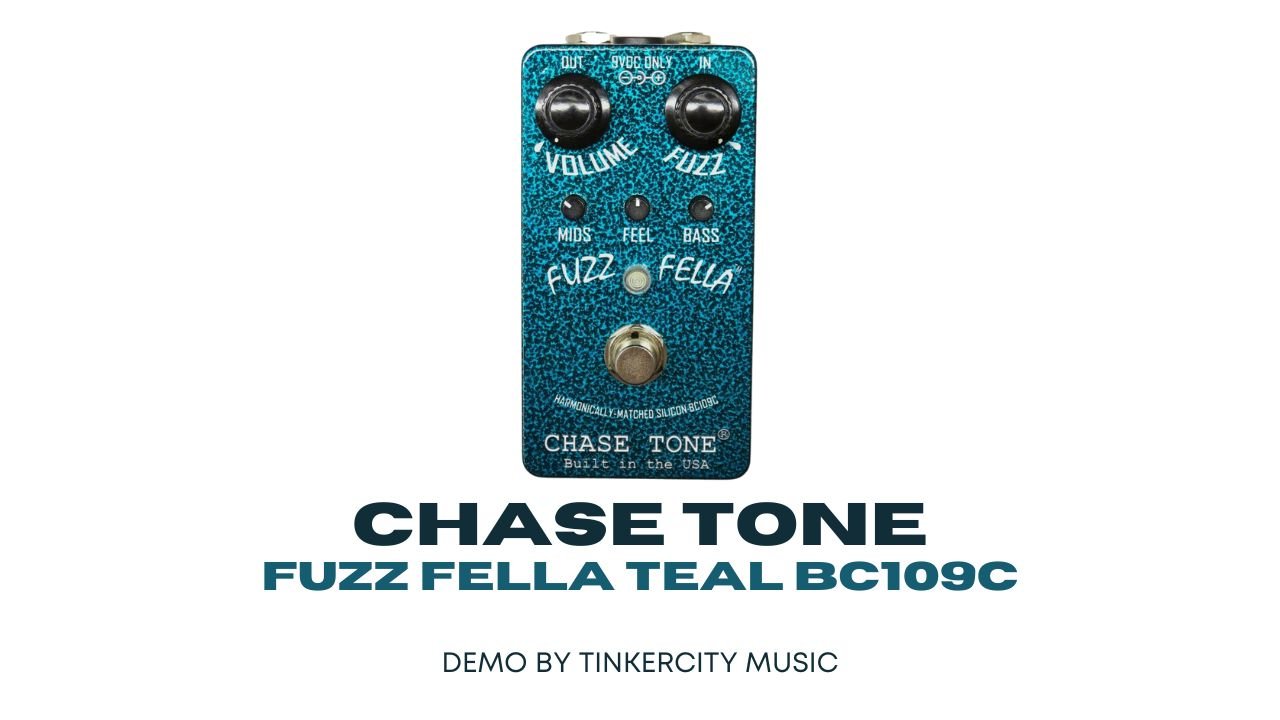
Hello Gearheads! Today I’ve got another fantastic fuzz to share with you… the Chase Tone Fuzz Fella Teal BC109c! I’ve had the luxury of checking out a few of Kyle Chase’s great fuzzy creations over the years, check back on past Gearheads Features for both the Fuzz Fella Blue BC108C and the ‘68 Red Velvet Fuzz… and this newest creation is right in great company!

Kyle Chase builds incredible sounding and feeling pedals, he has a great ear in how he voices these circuits and if you haven’t had the chance to check out something from his line - I highly encourage it! Not only are they extremely toneful, versatile and musical… they’re quite affordable! I’ve mentioned this about a few other builders, but I’m just not sure how Kyle puts these out to market at the prices he charges! Great parts, hand built and wired in USA to boot. If fuzz isn’t your things, his Secret Preamp is a very good tone shaper in the vein of an Echoplex Preamp. Easily one of the best in the market.

The Fuzz Fella Teal BC109C in Kyle’s words is a ‘Desert Island Drive’ capable of merging the world of gnarly fuzz and singing overdrive. I found all this to be true in working on this feature. I found the Teal Fella to sit really well in all those tonal camps, largely in part to it’s tone shaping feature set. It worked fantastically with all the instruments and amplifiers I used it with and like any great Fuzz Face circuit, it cleaned up amazingly. Most often when a Fuzz pedal, especially a Fuzz Face circuit employs the types of tone shaping controls the Teal Fella does, shortcomings end up showing themselves in how natural the sound of the pedal is. Not the case in any way here - I was very impressed.

The Feature set offers the usual Volume and Gain but with the addition of mini trimmers for Midrange, Feel and Bass. These mini trimmers offered the biggest and most useful alterations for me. I found that they all interact with each other to create a fuller picture of the tone you’re trying to achieve, whether it be thicker, thinner or more/less aggressive. The kicker is that while they all share a relationship, it’s not detrimental to each control to make changes. Some pedals often sound great if you set them in a certain way but then if you need to make a small change, they end up sounding artificial and terrible. Not the case here!

I found the Teal Fella to be a great option for folks who never really got along with the Fuzz Face, or want to dabble in Fuzz pedals but don’t want to spend $1000 to find out they don’t really like that sound. It’s not the price margin either that makes this a perfect pedal in that regard - it’s how well it can integrate with your rig and ultimately what sound you’re looking for. I easily found gnarly thick Fuzz Face tones as much as I found gritty and smoother overdrive tones. Rolling back my guitar’s volume knob at any point yielded a variety of clean to edge of breakup tones. Plainly put, regardless of price… this is a really great pedal.

In the demo below I used the Teal Fella on all the guitars and even on some bass parts. Any clean tones you hear are with the volume knob rolled back. It responded to both humbucking and single coil pickups as well as both British and American style amplifiers. I used a ‘76 50w Marshall JMP and a Two Rock Traditional Clean. I’m highly impressed with this latest fuzz from Chase Tone, it might honestly be my favorite from them to date. I absolutely encourage you to grab one of these and find out yourself… slap that pedal on a board and you’re ready to go!

Thanks for checking this Gearheads Feature on the Chase Tone Fuzz Fella Teal BC109C. If you’d like to learn more about Kyle and his work please do check out these sites for more information.

https://chasetone.com/

https://chasetone.com/fuzz-fella-teal-bc109c/

Until next time Gearheads, please take a moment to Like, Subscribe & Share this Feature and I’ll see you all very soon!